Lazy eye is considered one of the common visual problems in childhood, and it occurs when vision in one eye does not develop normally compared to the other. Early dealing with lazy eye in children helps improve visual ability and prevent future complications, especially since the visual system is in a sensitive growth stage during the first years of life. The earlier treatment begins, the more chances for its success increase significantly.
What is lazy eye in children?
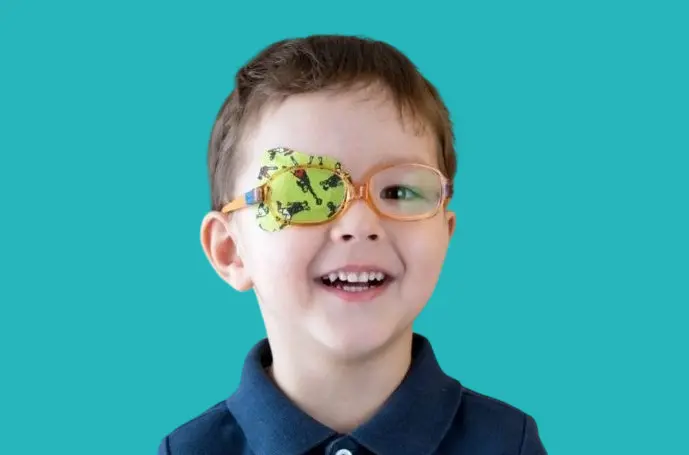 Treatment of lazy eye in children
Lazy eye in children is a weakness in vision that is not due to an obvious organic problem in the eye itself, but rather to a defect in the communication between the eye and the brain. The brain ignores the image coming from the weaker eye, which leads to a deterioration in its ability to see over time if not treated.
Causes of lazy eye in children
The causes leading to lazy eye in children are numerous, and among the most important are:
- Constant or intermittent strabismus (eye turn).
- A large difference in visual acuity between the two eyes.
- Uncorrected refractive errors such as nearsightedness or farsightedness.
- Neglecting periodic eye examination at an early age.
- Knowing the cause helps in choosing the appropriate treatment method.
The importance of early diagnosis of lazy eye
Early diagnosis plays a pivotal role in treating lazy eye in children, as the brain is more trainable in the early years. Because delay in discovering the problem may reduce the effectiveness of treatment and lead to permanent weakness in vision.
Methods of treating lazy eye in children
Methods of treating lazy eye in children depend on the cause and degree of weakness and include:
- Correcting refractive errors using prescription glasses.
- Covering the healthy eye for specific periods to stimulate the weak eye.
- Using drops that temporarily weaken the strong eye.
- Regular follow-up to assess improvement.
The role of eye exercises in treatment
Eye exercises are used as a supportive means in treating lazy eye in children, as they help with:
- Activating the weak eye.
- Improving visual focus.
- Enhancing coordination between the eyes.
When does a child need to follow up with the doctor?
Regular follow-up is an essential part of treating lazy eye in children, during which:
- The development of visual acuity is evaluated.
- The duration of eye covering is adjusted.
- Ensuring the child's adherence to the treatment plan.
- Adherence to follow-up increases the chances of complete recovery.
Can lazy eye be prevented?
Lazy eye in children can be prevented by:
- Conducting periodic vision exams from an early age.
- Treating strabismus and refractive errors immediately upon discovery.
- Following up on any complaints related to vision or visual focus.
- Prevention and early detection are the foundation for maintaining eye health.
When do the results of lazy eye treatment appear?
The speed of improvement varies from child to another depending on age and the degree of laziness, but often results begin to appear within weeks to months of commitment to treatment, especially when treating lazy eye in children at an early age.
Frequently asked questions about lazy eye in children
Is covering the eye painful for the child?
It does not cause pain, but it may require psychological acclimatization initially.
Can lazy eye be treated after school age?
It can be treated, but the results are better the younger the age.
Article Summary
Lazy eye in children is a common visual problem that can be treated successfully with early diagnosis and adherence to the appropriate treatment plan.
Treatment depends on correcting refractive errors and stimulating the weak eye, along with continuous medical follow-up. Periodic eye examination at an early age remains the most important means for prevention and maintaining visual acuity in children.

Scientific Degree: Pharmacist
Country: Egypt
Pharmacist Hossam Mohamed Abdel-Azim is a Doctor of Pharmacy (PharmD) with a Bachelor of Pharmacy degree from Ismailia University. He has experience in the medical field gained through working in several pharmacies and reading numerous medical references.
He is a medical content writer aiming to provide beneficial content for everyone.
Published Date: 21 December 2025
you should ask your doctor before taking this medicine