Hyperthyroidism in children is a hormonal disorder that occurs when the thyroid gland produces excessive amounts of thyroid hormones. This can lead to rapid weight loss and growth disturbances.
If you notice any symptoms in your child, it's essential to consult a doctor to determine the appropriate treatment based on the child's age and the severity of the condition, and to prevent complications.
What is hyperthyroidism in children
It's a hormonal disorder in which the thyroid gland produces excessive amounts of thyroid hormones, such as T3 and T4, leading to various health problems throughout the child's body.
Causes of hyperthyroidism in children
There are several causes of hyperthyroidism in children, including:
- Thyroiditis (inflammation of the thyroid gland).
- Graves' disease.
- Excess iodine in the child's body.
- A family history of the condition.
Symptoms of hyperthyroidism in children
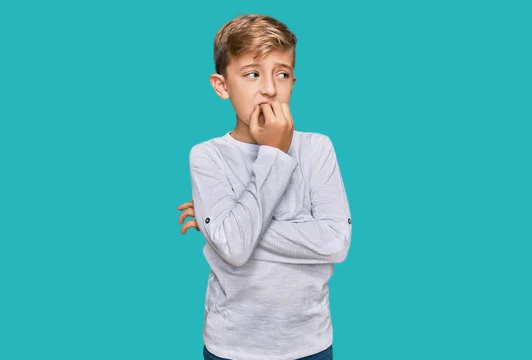 Childhood anxiety is a symptom of hyperthyroidism in children
The symptoms of hyperthyroidism in children are often noticeable and include:
- Diarrhea (diarrhea).
- Rapid weight loss.
- Rapid heartbeat.
- Bloating and protruding eyes.
- Difficulty concentrating and hyperactivity.
- Impaired restlessness and irritability.
- Hand tremors and excessive sweating.
- Sleep disturbances.
How is hyperthyroidism diagnosed in children
The doctor begins by asking the parents about the child's medical history. Then, they conduct a physical examination, observe the symptoms, and order some medical tests.
These tests include measuring thyroid hormones such as T3, T4, and TSH. An ultrasound of the thyroid gland may also be ordered to determine its size and thus identify the most appropriate treatment for the child.
Treatment options for hyperthyroidism in children
Treatment for hyperthyroidism in children focuses on reducing the secretion of T3 and T4 hormones using various methods, depending on the severity of the condition and the child's age. These methods include:
- Radioactive iodine therapy.
- Medications to relieve symptoms.
- Antithyroid medications.
- Surgical removal of part of the thyroid gland.
Medications for Treating Hyperthyroidism in Children
Medications should be used under a doctor's supervision to determine the active ingredient and the appropriate dosage for the child's condition and age. Some of these medications include:
- Tapazol.
- Matazor.
- Thirocil.
- Carbimazole.
- Thirocarbin.
- Neomercazole.
Prevention of Hyperthyroidism in Children
Hyperthyroidism in children is often not preventable, especially if the cause is genetic. However, regular checkups are recommended.
In addition, close monitoring of the child's growth is important for early detection and to determine the appropriate treatment to alleviate symptoms and reduce thyroid hormone production.
What are the complications of hyperthyroidism in children
Hyperthyroidism in children can lead to complications that increase the child's fatigue, such as:
- Reduced growth.
- Eye problems.
- Nervousness.
- Osteoporosis and increased risk of fractures.
Frequently Asked Questions
At what age does hyperthyroidism begin
It may begin to appear in children between the ages of 5 and 10.
Can hyperthyroidism in children be cured
Yes, it can be cured, especially if it is diagnosed and treated early, at the onset of symptoms.
Can children be born with hyperthyroidism
Yes, this condition is known as congenital hyperthyroidism and occurs when antibodies are passed from the mother to the fetus.
What is the effect of the thyroid gland on a child's growth
The thyroid gland has a direct effect on a child's growth. A deficiency in thyroid hormones leads to weight gain, while an excess leads to weight loss.
Can hyperthyroidism resolve on its own
Yes, in some cases, such as temporary thyroiditis, but this is rare.
Article Summary
Hyperthyroidism in children is characterized by weight loss, increased sweating, and a rapid heartbeat, which can be very worrying for parents.
Therefore, you should go to a specialist doctor as soon as these symptoms appear, and undergo the necessary examinations and tests, and adhere to the treatment and instructions to reduce the secretion of thyroid hormones and reduce its symptoms.

Scientific Degree: Pharmacist
Country: Egypt
Dr. Radwa Reda El-Saeed
PhD in Pharmacognosy | Clinical Pharmacist & Medical Content Reviewer
Holding a Bachelor of Pharmaceutical Sciences from Alexandria University and a PhD in Pharmacognosy, Dr. Radwa brings extensive clinical and academic expertise through community pharmacy practice and ongoing engagement with clinical research.
At Rosheta, she authors and reviews pharmaceutical and medical content, adhering strictly to the latest therapeutic guidelines and verified medical references to ensure that readers receive accurate, evidence-based, and safe medication information.
Published Date: 06 December 2025
you should ask your doctor before taking this medicine