Amblyopia, or lazy eye, is a condition in children that causes blurred vision due to weakness in one eye. As a result, the child's vision is relied upon by the stronger eye.
Parents may not notice the symptoms clearly at first, but early detection and treatment can help restore vision and prevent serious complications.
What is amblyopia in children
It is also known as lazy eye in children and is a condition where vision is weak in one or both eyes, causing the brain to rely on the stronger eye.
This leads to a gradual decline in the visual acuity of the affected eye, resulting from a defect or delay in its visual development.
Causes of amblyopia in children
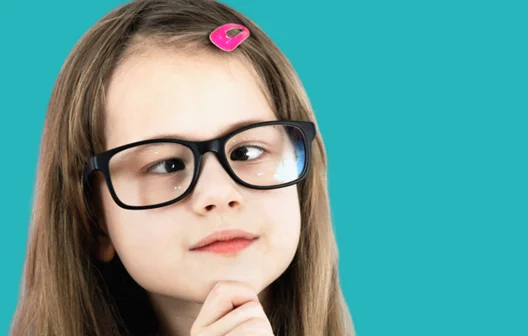 Strabismus (crossed eyes) in children is one of the causes of amblyopia (lazy eye) in children
There are several causes of amblyopia in children, some medical and others that increase the likelihood of developing it. These include:
- Drooping eyelid (ptosis).
- Hyperopia (farsightedness).
- Myopia (nearsightedness).
- Strabismus (crossed eyes).
- Premature birth.
- Cataracts.
- Low birth weight.
- A family history of the condition.
Symptoms of Lazy Eye in Children
Parents may find it difficult to notice the symptoms of lazy eye in children initially because the child doesn't complain of blurred vision. However, some symptoms may appear, such as:
- Tilting the head to try to see.
- Closing one eye to focus.
- Strabismus (crossed eyes) and incoordination of eye movements.
- Complaints of blurred vision.
- Incorrect distance estimation and poor depth perception.
How is lazy eye diagnosed in a child
Diagnosis is made by an ophthalmologist after reviewing the child's medical history and conducting initial eye examinations, such as visual acuity testing and eye movement tests.
After ruling out other conditions that may cause similar symptoms, early diagnosis is recommended to determine the most appropriate treatment for the child's age and condition.
Treatment Options for Lazy Eye in Children
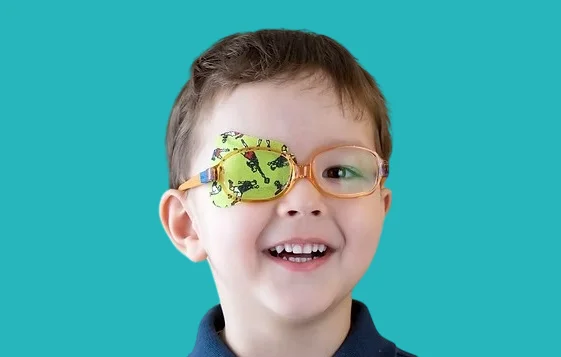 Covering the healthy eye is one way to treat lazy eye in children
The earlier treatment for lazy eye begins, the better the results. There are several treatment options that the child will choose based on their age, the severity of the condition, and its cause:
- Surgical treatment
- Treatment with eye drops for blurred vision.
- Vision correction using eyeglasses.
- Covering the healthy eye for one or two hours daily.
Potential complications of amblyopia in children
If treatment and diagnosis are neglected or delayed, this can lead to serious and permanent complications such as permanent strabismus (crossed eyes).
Sometimes, the child may experience central vision problems, which can ultimately result in complete vision loss and permanent blindness.
How to prevent amblyopia in children
Amblyopia can be prevented in children by:
- Seeing a doctor promptly upon noticing symptoms.
- Having regular eye exams if the condition is hereditary.
- Treating any existing eye conditions to prevent them from developing into amblyopia.
Frequently Asked Questions
Can amblyopia be cured
Yes, amblyopia in children can be cured, especially if it is diagnosed and treated early.
How long should a child's healthy eye be covered
A child's healthy eye can be covered for one or two hours daily to strengthen the vision of the amblyopic eye.
What are the appropriate glasses for lazy eye in children
If lazy eye in children is caused by nearsightedness, farsightedness, or a refractive error, it can be treated with glasses as recommended by a doctor.
Article Summary
Lazy eye in children, also known as amblyopia, is a condition where a child's vision is impaired due to one eye being weaker, causing the brain to focus on processing images from only one eye.
Although there are several treatment and prevention methods available, delaying a visit to the doctor and neglecting treatment can lead to serious complications such as blindness and permanent vision loss.

Scientific Degree: Pharmacist
Country: Egypt
Dr. Radwa Reda El-Saeed
PhD in Pharmacognosy | Clinical Pharmacist & Medical Content Reviewer
Holding a Bachelor of Pharmaceutical Sciences from Alexandria University and a PhD in Pharmacognosy, Dr. Radwa brings extensive clinical and academic expertise through community pharmacy practice and ongoing engagement with clinical research.
At Rosheta, she authors and reviews pharmaceutical and medical content, adhering strictly to the latest therapeutic guidelines and verified medical references to ensure that readers receive accurate, evidence-based, and safe medication information.
Published Date: 03 December 2025
you should ask your doctor before taking this medicine