Strabismus in children is a visual problem that occurs when one eye looks straight ahead while the other looks in a different direction.
Parents often notice the symptoms clearly in their child, allowing for early detection and treatment. If left untreated, strabismus can lead to blurred vision or amblyopia (lazy eye).
What is Strabismus in Children
Strabismus is a visual misalignment where the eyes are not pointed in the same direction, affecting the child's vision. It typically appears in early childhood and can be temporary or permanent.
Causes of Strabismus in Children
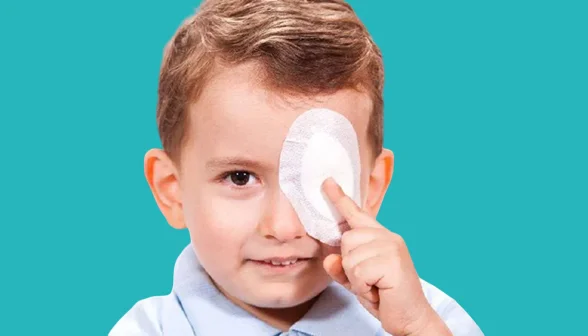
Strabismus in children occurs due to a disturbance or weakness in the eye muscles or nerves, resulting from the following:
- Eye injury.
- Premature birth.
- Cataracts.
- A family history of strabismus.
- Hyperopia (nearsightedness) or hyperopia (farsightedness).
- Retinal diseases.
Symptoms of Strabismus in Children
The symptoms of strabismus in children are easily noticeable and include:
- Eye pain and strain.
- Tilting the head to see. Strabismus (crossed eyes).
- Difficulty reading and poor concentration.
- Difficulty tracking moving objects.
- The child may close one eye to see clearly.
How is strabismus diagnosed in children
Diagnosis is made by an ophthalmologist who observes the primary symptom in the child, which is the misalignment of one eye, and then assesses the vision in each eye separately.
Specific tests are conducted to determine the underlying cause of the strabismus and to rule out pseudostrabismus (false strabismus), as well as to determine if the cause is hereditary, in order to prescribe the appropriate treatment for the child.
Treatment methods for strabismus in children
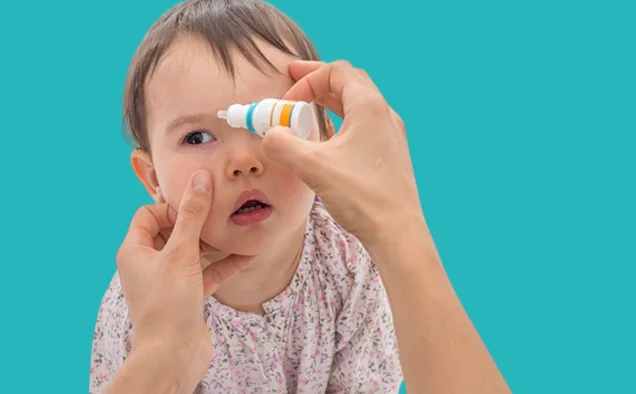
Treatment methods for a child depend on the cause, severity, and age of the strabismus. These methods include:
- Using eye drops.
- Wearing corrective lenses.
- Eye exercises.
- Surgery.
Preventing strabismus in children
In some cases, strabismus in children cannot be prevented, especially if the cause is hereditary. However, its symptoms can be reduced and complications avoided by:
- Treating farsightedness or nearsightedness.
- Adhering to corrective lenses.
- Consulting a doctor immediately if any symptoms appear.
- Protecting children from serious eye injuries.
- Avoiding excessive use of electronic screens.
Complications of Strabismus in Children
Complications may arise from neglecting diagnosis and treatment, such as amblyopia (lazy eye), delayed visual development, and impaired vision in the eye affected by strabismus.
Frequently Asked Questions
At what age does strabismus become abnormal
If it appears in a child at 6 months of age and persists until 3 years, with difficulty seeing objects.
When does strabismus resolve in children
If the strabismus is mild, it usually improves by age 6. However, it may be permanent and require medical intervention to determine the appropriate treatment.
What is the difference between pseudostrabismus and true strabismus
Pseudostrabismus is temporary and caused by a skin fold, while true strabismus is permanent and results from weakness and dysfunction of the eye muscles and nerves.
When do children outgrow pseudostrabismus
Pseudostrabismus usually disappears after the first few months of life as the eye muscles develop and mature.
Article Summary
A child may develop strabismus (crossed eyes) due to genetic factors or eye injury. Parents can easily notice the symptoms in an affected child, and a doctor should be consulted to determine the most appropriate treatment and avoid potential complications.

Scientific Degree: Pharmacist
Country: Egypt
Dr. Radwa Reda El-Saeed
PhD in Pharmacognosy | Clinical Pharmacist & Medical Content Reviewer
Holding a Bachelor of Pharmaceutical Sciences from Alexandria University and a PhD in Pharmacognosy, Dr. Radwa brings extensive clinical and academic expertise through community pharmacy practice and ongoing engagement with clinical research.
At Rosheta, she authors and reviews pharmaceutical and medical content, adhering strictly to the latest therapeutic guidelines and verified medical references to ensure that readers receive accurate, evidence-based, and safe medication information.
Published Date: 14 November 2025
you should ask your doctor before taking this medicine